
What lies on the surface of the anthropomorphic figurines from Wilczyce?
Archaeological artefacts typically bear various types of residues on their surfaces. These may include both organic and inorganic substances that accumulated during the often complex “life history” of an artefact — during its manufacture, use, or deposition within an archaeological layer, as well as through associated post-depositional processes. It is also important to note that, following excavation, artefacts may become contaminated with modern materials during storage and analysis.
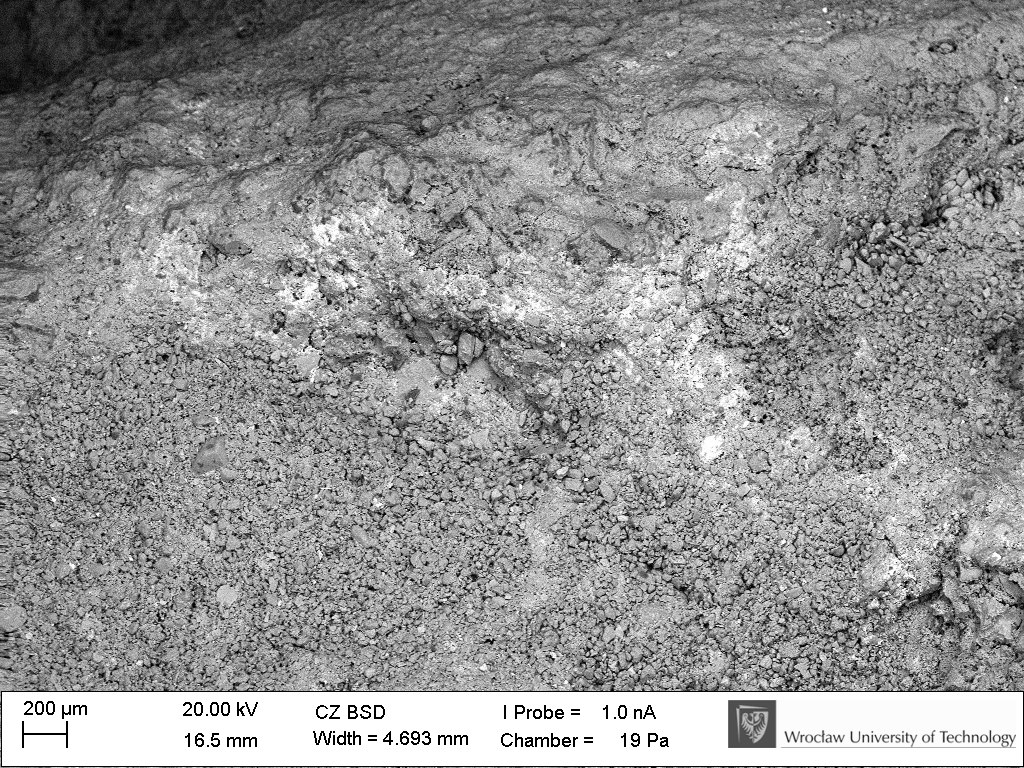
This is also the case for the flint anthropomorphic figurines from the Wilczyce 10 site. Their surfaces display a range of residues — some visible macroscopically, others detectable only under high magnification. Substances collected from the surfaces of four selected artefacts were subjected to detailed specialist analysis as part of our recent research, conducted in collaboration with scientists from the Faculty of Mechanical Engineering at Wrocław University of Science and Technology and the Faculty of Chemistry at the Jagiellonian University. The aim of these analyses was to identify the elements and chemical compounds forming the residues, which may ultimately allow for their interpretation. The artefacts were made available for study courtesy of the Institute of Archaeology and Ethnology of the Polish Academy of Sciences.
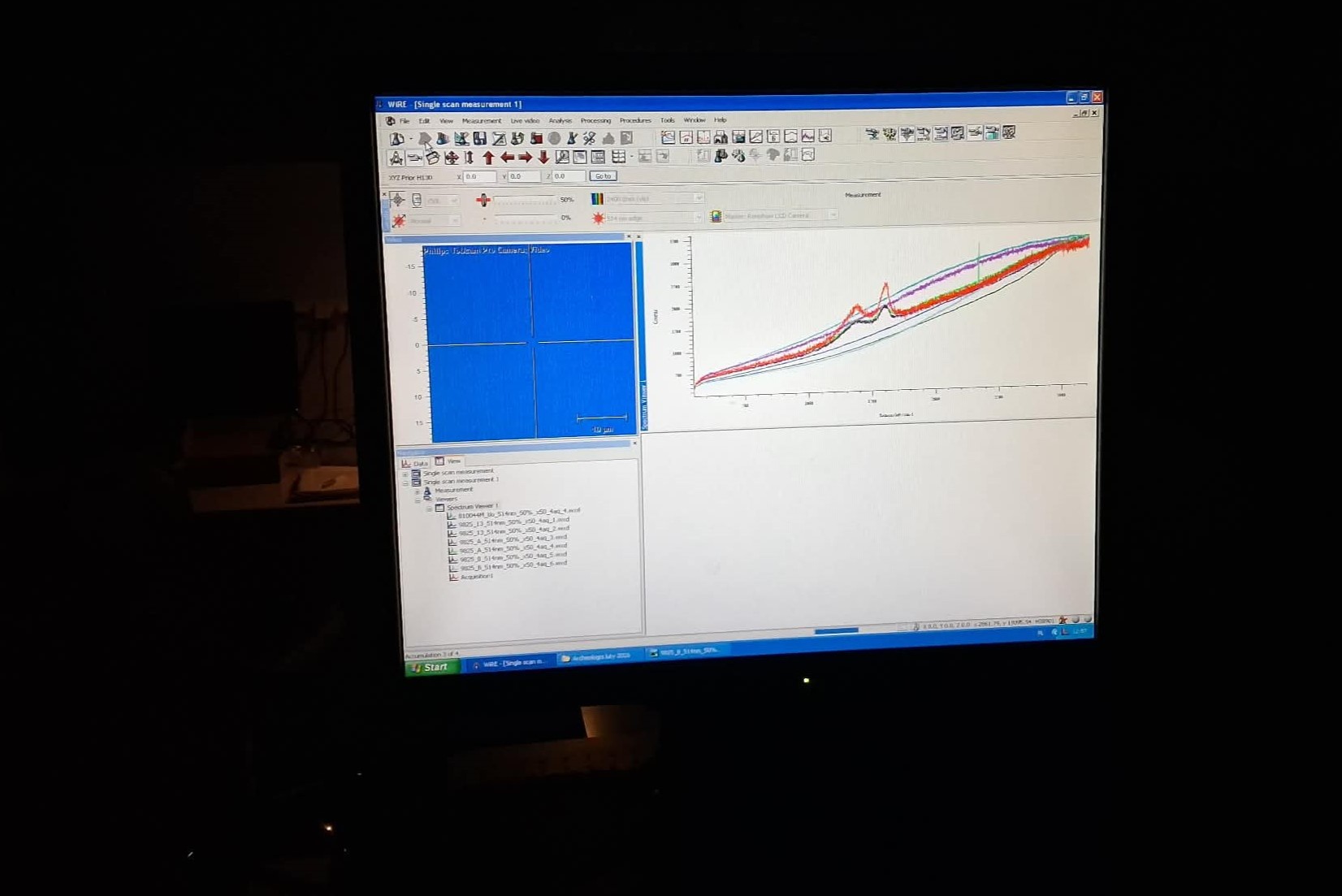
The analyses were conducted using the same non-invasive methods (i.e. those that do not adversely affect the condition of the artefacts) as those previously applied to decorated artefacts from Maszycka Cave. These include Raman spectroscopy, based on the characteristic scattering of light by specific substances, producing a Raman spectrum, and SEM-EDS (scanning electron microscopy combined with energy-dispersive spectroscopy), which involves directing a focused electron beam onto a selected area in order to identify the chemical elements present. The application of more than one analytical method enables the comparison of results, which is essential for confirming the reliability of the data obtained.
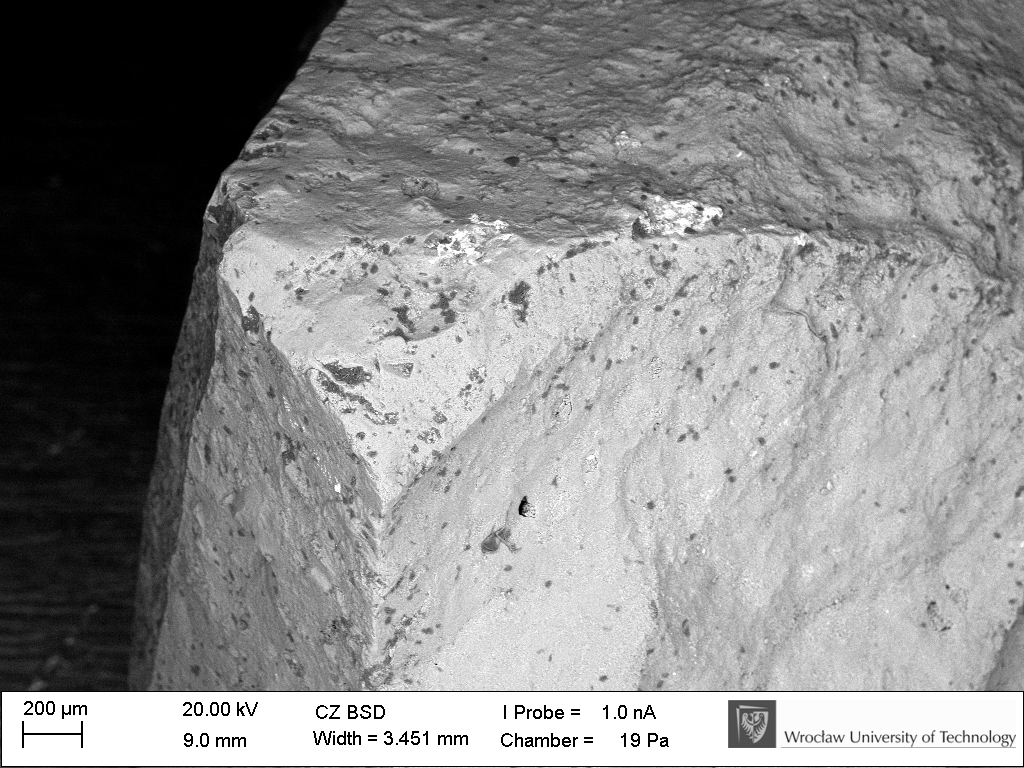
The study of residues present on the surfaces of four selected figurines has yielded valuable and promising results. The current task of our research team is to carry out further analyses of selected residues found on the remaining figurines. This will provide a larger dataset necessary for a comprehensive characterisation of the substances present on the artefacts within the assemblage. The next stage of research will focus on the interpretation of the results and an attempt to draw broader conclusions on this basis.