
“Venus” Figurines from the Wilczyce 10 Site
At the end of 2025, we initiated a research programme on the “Venus” figurines from the Wilczyce 10 site, conducted in cooperation with the Institute of Archaeology and Ethnology of the Polish Academy of Sciences. The eight artefacts that have been made available to us so far form part of a rich assemblage of figurines interpreted by researchers as schematic representations of the female torso and the upper parts of the legs, depicted in profile. At the Wilczyce 10 site, located in the Świętokrzyskie region and dated to the Late Magdalenian, more than 60 artefacts of this type have been recovered, preserved either intact or fragmentarily. The majority were manufactured from flint raw material, with only a few exceptions made from osseous materials. Importantly, the figurines appear to have been produced on-site, as evidenced by remains representing various stages of the production process.
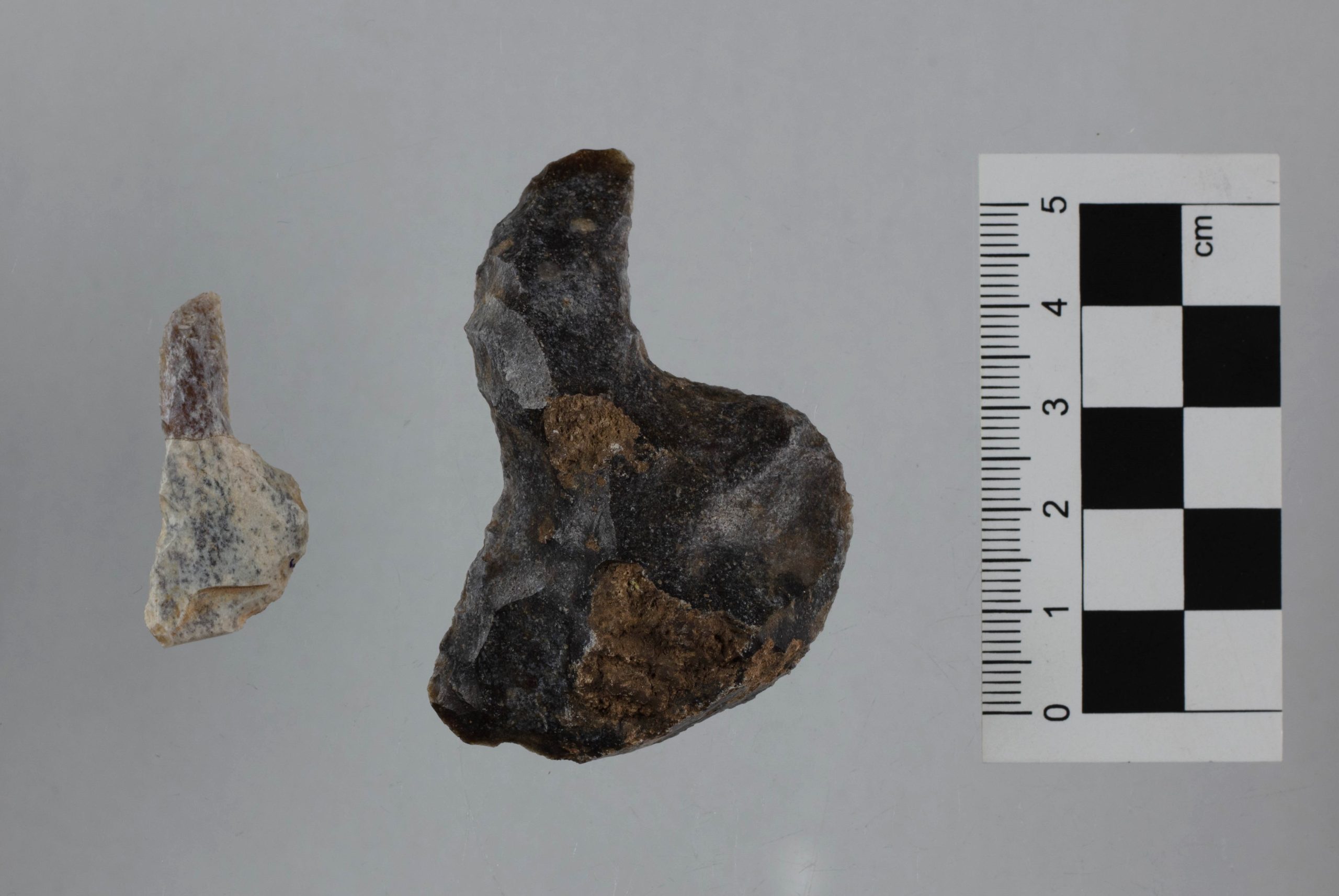
The “Venus” figurines display several distinctive characteristics. One of the most notable features is the omission of the head and the lower parts of the legs in the representation of the female body. The artefacts were manufactured from flint flakes and blades; consequently, their aesthetic and symbolic qualities are perceptible exclusively from two viewpoints — when observed from the front and from the back. At first glance, the figurines differ only slightly in size and overall “slenderness”. Some specimens are elongated and slender, while others are characterised by greater width and thickness, as illustrated in the accompanying photographs. It is also worth noting that the assemblage from Wilczyce 10 is unique due to the use of flint as the raw material. Comparable stone representations of female figures from other Magdalenian sites were produced using different lithic materials, such as slate, jet, or limestone.
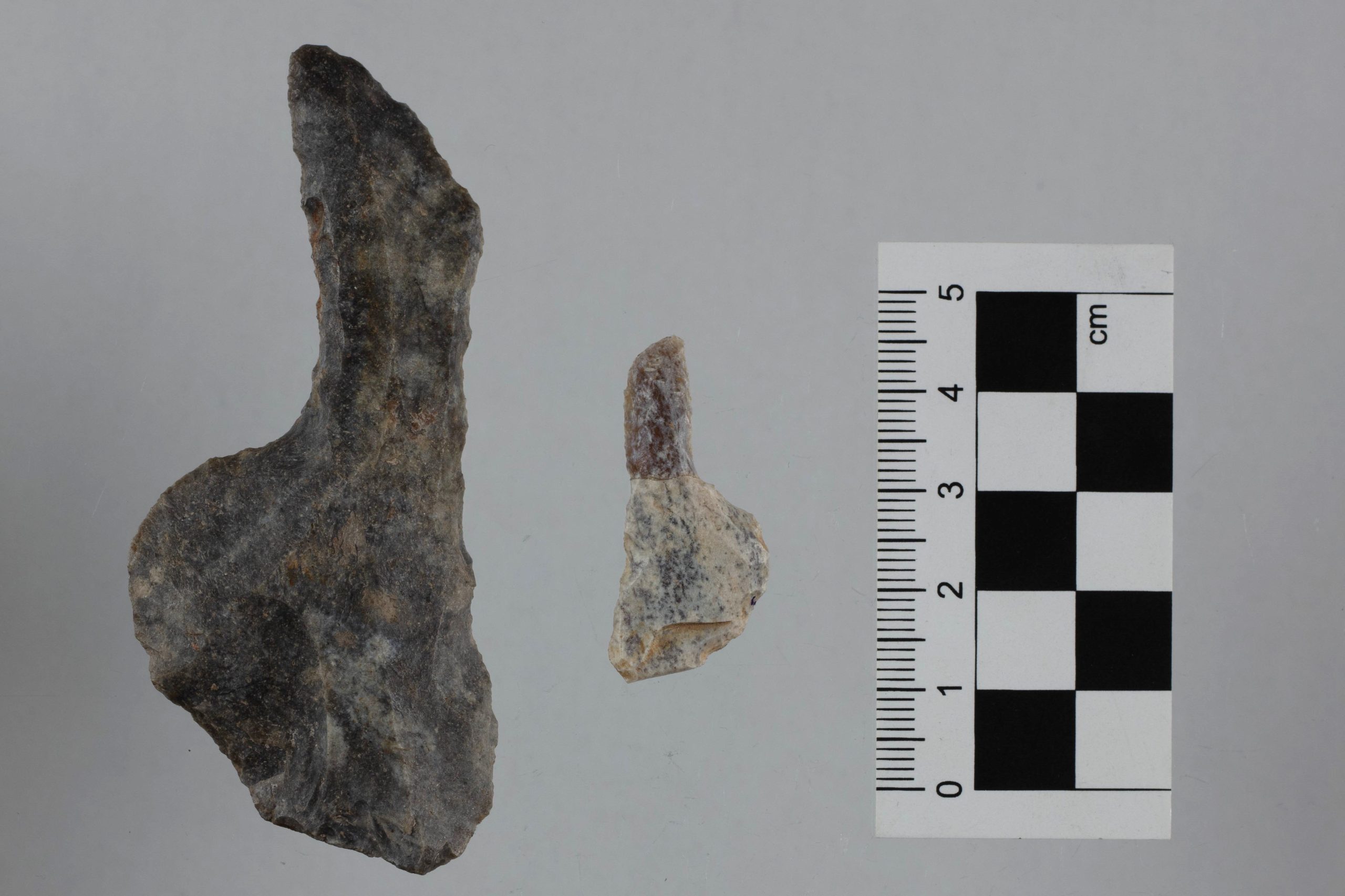
An intermediate objective of the planned research is a comprehensive analysis of the figurines, which we hope will allow us to identify their role within Magdalenian communities as well as the ways in which they were used. Our study includes, among other approaches, use-wear (traceological) analysis, aimed at examining the artefact surfaces for traces resulting from utilisation. This line of research is particularly important, as it may help answer the question of whether the figurines were used, and if so, how. The interpretation of these traces will be supported by the results of experimental studies conducted by our team, which provide a comparative reference framework. To date, half of the currently available assemblage (four specimens) has been analysed, revealing intriguing surface traces that will be interpreted in the subsequent stages of the project. In parallel, we are conducting a morphological analysis of the figurines using advanced statistical methods, including geometric morphometrics (GM). These analyses will enable a closer examination of the stylistic characteristics of the assemblage, as well as the similarities and differences between individual specimens. Further artefacts from the collection will be systematically incorporated into the study and subjected to the same analytical procedures.